
The evolution of arteriosclerosis
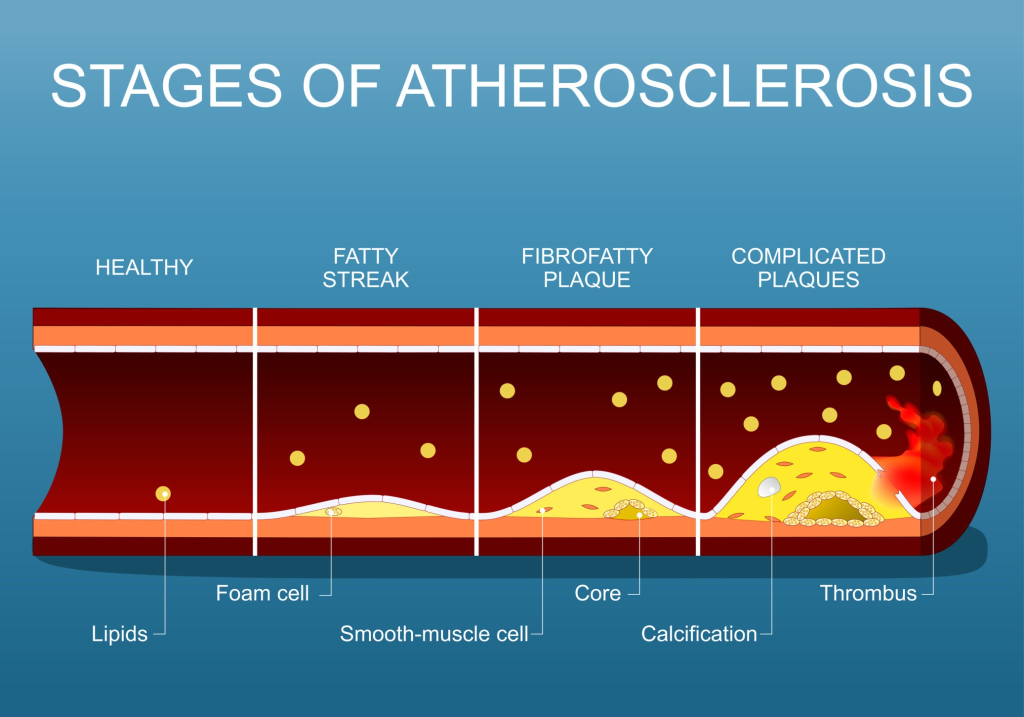
「血管硬化」精確來說通常指動脈粥狀硬化(Atherosclerosis)。這不是一天造成的,而是一個橫跨數十年、極其緩慢且隱形的神經與組織演化過程。
我們可以將這個過程比喻成「城市水管的淤積與鏽蝕」,主要分為以下四個關鍵階段:
1. 內皮細胞損傷(隱形的前奏)
健康的血管內壁(內皮細胞)本該是光滑且富有彈性的。但由於以下因素,這層保護膜會開始出現微小受損:
- 高血壓: 強大的壓力長期撞擊血管壁。
- 高血糖: 血液中的糖分像「砂紙」一樣磨損血管。
- 抽菸: 化學物質導致血管發炎。
2. 脂肪條紋期(Fatty Streak)
當內皮受損,血液中的**低密度脂蛋白(LDL,壞膽固醇)**就會趁機滲入血管壁。
- 免疫啟動: 身體偵測到異物,派出「巨噬細胞」去吞噬這些膽固醇。
- 泡沫細胞: 巨噬細胞吞了太多脂肪後,會變成像肥皂泡一樣的「泡沫細胞」,堆積在血管壁中,形成肉眼可見的淡黃色條紋。
- 年齡: 這個階段最早甚至可能在青少年時期就開始。
3. 纖維斑塊形成(硬化的主體)
隨著發炎持續,身體試圖「修復」這個區域,會產生纖維組織與平滑肌細胞來包覆這團脂肪。
- 斑塊成型: 形成一個中心是脂肪、外層是纖維蓋的「斑塊」。
- 管腔狹窄: 血管壁開始變厚、變硬,管徑變小,血液流量受阻。此時運動時可能感到胸悶或痠痛。
4. 不穩定斑塊與血栓(致命的轉折)
這是演化過程中最危險的一步。
- 鈣化: 斑塊逐漸鈣化,變得像石頭一樣脆。
- 破裂: 如果斑塊表面(纖維蓋)因為壓力過大而破裂,裡面的脂肪物質接觸血液,會瞬間誘發**血栓(血塊)**形成。
- 完全阻塞: 血栓像塞子一樣堵死血管,若發生在心臟即為心肌梗塞,發生在大腦即為腦中風。
血管演化過程總結表
| 階段 | 主要變化 | 症狀感官 |
| 初期 | 內皮受損、膽固醇滲入 | 無感 |
| 中期 | 泡沫細胞堆積、纖維蓋形成 | 可能有血壓升高 |
| 後期 | 管腔明顯狹窄 | 運動耐受力下降、心絞痛 |
| 末期 | 斑塊破裂、血栓形成 | 急性梗塞(需急救) |
醫學小提醒:
血管硬化在「斑塊破裂」之前,往往是沒有明顯痛感的。這就是為什麼它被稱為「沉默的殺手」。
您目前是否正在關心特定的健康數值(如低密度膽固醇 LDL-C 或血壓),需要我為您分析這些指標對血管硬化的具體影響嗎?
“Arteriosclerosis,” more precisely, usually refers to atherosclerosis. This doesn’t happen overnight, but is an extremely slow and invisible neural and tissue evolutionary process spanning decades.
We can liken this process to “the sludge and rust in a city’s water pipes,” mainly divided into the following four key stages:
1. Endothelial Cell Damage (The Invisible Prelude)
Healthy blood vessel walls (endothelial cells) should be smooth and elastic. However, due to the following factors, this protective membrane begins to show microscopic damage:
- High Blood Pressure: The strong pressure constantly impacts the blood vessel walls.
- High Blood Sugar: Sugar in the blood acts like “sandpaper,” abrading the blood vessels.
- Smoking: Chemicals cause inflammation of the blood vessels.
2. Fatty Streak Stage
When the endothelium is damaged, low-density lipoprotein (LDL, bad cholesterol) in the blood can seep into the blood vessel walls.
- Immune Activation: The body detects foreign substances and dispatches macrophages to engulf the cholesterol.
- Foam Cells: After macrophages engulf too much fat, they become “foam cells,” resembling soap bubbles, accumulating in the blood vessel walls and forming visible pale yellow streaks.
- Age: This stage can begin as early as adolescence.
3. Fibrous Plaque Formation (The Core of Hardening)
As inflammation persists, the body attempts to “repair” the area, producing fibrous tissue and smooth muscle cells to encapsulate the fat mass.
- Plaque Formation: A plaque forms, with a fat center and an outer fibrous covering.
- Lumen Narrowing: The blood vessel walls begin to thicken and harden, the diameter decreases, and blood flow is obstructed. At this stage, chest tightness or soreness may be felt during exercise.
4. Unstable Plaques and Thrombosis (A Fatal Turning Point)
This is the most dangerous step in the evolutionary process.
- Calcification: Plaques gradually calcify, becoming brittle like stone.
- Rupture: If the plaque surface (fibrous cap) ruptures due to excessive pressure, the fatty material inside comes into contact with the blood, instantly inducing the formation of a thrombus (blood clot).
- Complete Obstruction: The thrombus acts like a plug, blocking the blood vessel. If this occurs in the heart, it’s called a myocardial infarction; if it occurs in the brain, it’s called a stroke.
Summary Table of Vascular Evolution
| Stage | Main Changes | Sensory Symptoms |
| — | — | — |
| Early Stage | Endothelial Damage, Cholesterol Infiltration | No Sensation |
| Middle Stage | Foam Cell Accumulation, Fibrous Cap Formation | May Cause High Blood Pressure |
| Late Stage | Significant Lumen Narrowing | Decreased Exercise Tolerance, Angina Pectoris |
| Late Stage | Plaque Rupture, Thrombosis | Acute Infarction (Requires Emergency Treatment) |
Medical Reminder:
Arteriosclerosis often presents without noticeable pain before plaque rupture. This is why it’s called the “silent killer.”
Are you currently concerned about specific health metrics (such as LDL-C or blood pressure)? Would you like me to analyze the specific impact of these indicators on arteriosclerosis?
發佈留言